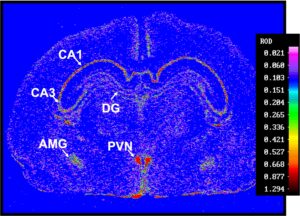
The developing brain is highly sensitive to its environment, responding dynamically to endocrine, nutritional, and chemical cues. Glucocorticoids (GCs) are essential regulators of normal brain development and are maintained at low levels throughout most of gestation. In late pregnancy, GC levels rise sharply—a critical surge that supports fetal lung maturation and the development of other organ systems, including the brain. However, premature elevation of fetal GC levels can occur due to maternal or fetal stress, or through clinical administration of antenatal corticosteroids (ACS), which are commonly used in cases of threatened preterm birth (~12% of pregnancies worldwide). Using animal models, our work has demonstrated that early exposure to ACS induces significant and lasting alterations in the epigenetic (e.g., DNA methylation and acetylation) and transcriptional landscapes of key brain regions, including the prefrontal cortex, hippocampus and hypothalamic paraventricular nucleus. These molecular changes are associated with disruptions in hypothalamic-pituitary-adrenal (HPA) axis function and stress-related behaviours that persist into adulthood. Notably, we have identified epigenetic signatures of synthetic GC exposure and maternal adversity in the blood of human newborns, highlighting translational relevance. Our research also reveals that these effects can be transmitted across generations. In animal models, ACS-induced changes in brain epigenetics, HPA function, and behaviour persist through both maternal and paternal lineages. Most recently, we have uncovered novel mechanisms of paternal transmission involving altered microRNA (miRNA) profiles within small extracellular vesicles (sEVs) derived from the epididymis.